
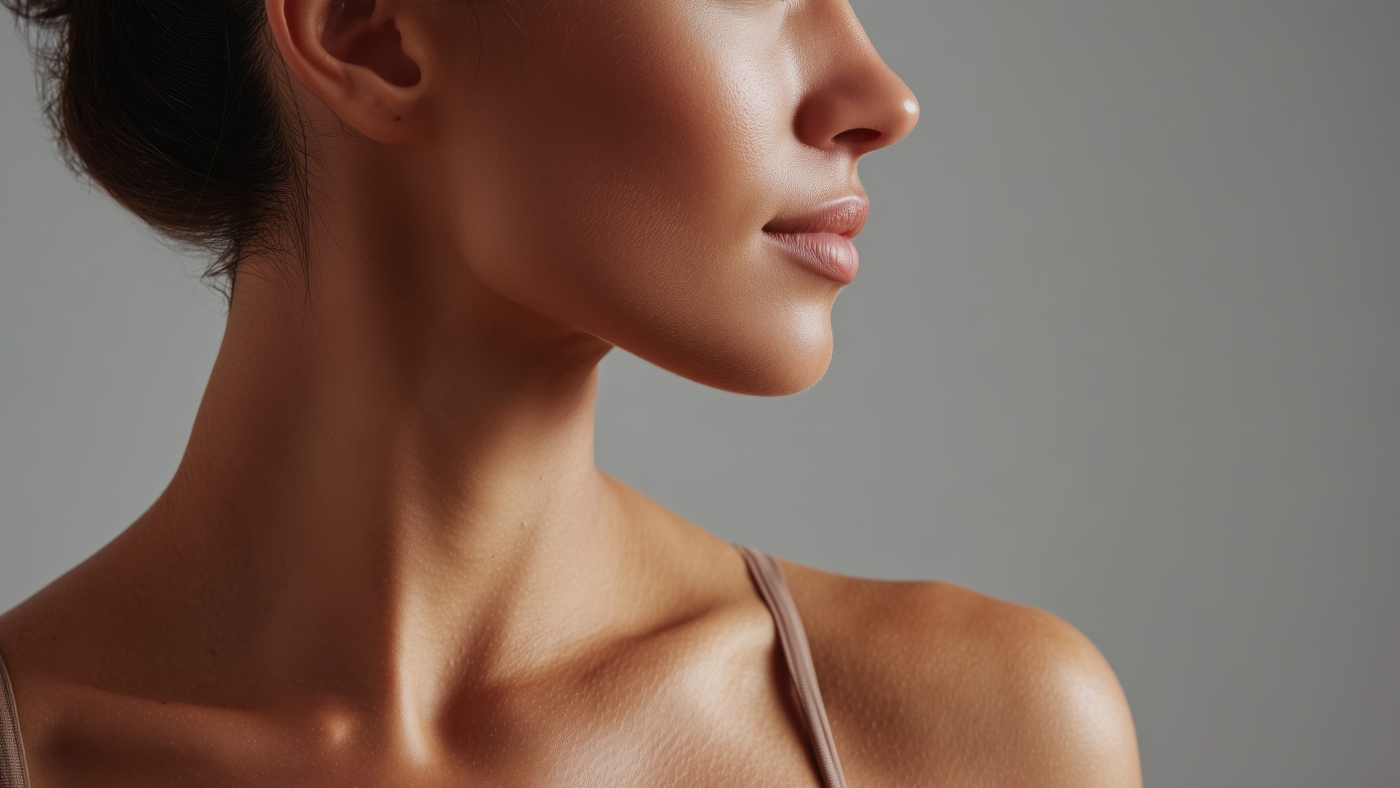
Weight loss can change more than the number on the scale. As the body becomes smaller, the face and neck can look different too — sometimes in ways that aren't immediately expected.
The cheeks and temples tend to get most of the attention, but changes around the jawline and neck can be just as noticeable. A softer jawline, looser skin, or a more crepey texture can appear after significant or rapid weight loss.
Understanding why this happens can make the process feel a little less mysterious.
Why the Neck Can Change So Noticeably
The skin around the neck is relatively thin and has less structural support than many other areas of the body. It also moves constantly throughout the day as you turn your head, look down, stretch, and change position.
Beneath the skin is a layer of soft tissue that contributes to the shape and fullness of the neck and jawline. When that volume decreases, the skin doesn't necessarily contract at exactly the same pace.
That's where the difference can become visible.
If the underlying tissue changes faster than the skin can adapt, the result may be a softer contour, fine lines, or a looser, more textured appearance.
It's Not Just About the Amount of Weight Lost
Two people can lose the same amount of weight and experience very different changes in their skin.
Several factors influence how the skin responds, including:
- Age
- Genetics
- Skin elasticity
- How quickly weight was lost
- How much weight was lost
- Previous changes in body weight
- Sun exposure
- Overall nutrition
- Hydration and lifestyle habits
This is why there isn't a single formula for predicting exactly how someone's neck or jawline will look after weight loss.
The Role of Age
Age naturally changes the way skin behaves.
Collagen and elastin production gradually decline over time, reducing some of the skin's ability to maintain firmness and bounce. When significant weight loss occurs alongside these natural changes, differences in skin laxity may become more noticeable.
This is particularly relevant for people experiencing hormonal transitions and other age-related changes in skin structure.
The important takeaway is that visible changes aren't necessarily a sign that you've done something wrong. Sometimes they're simply the result of several normal processes happening at once.
Does the Pace of Weight Loss Matter?
The skin needs time to adapt to changes in the tissues underneath it.
When weight is lost rapidly, the underlying volume can change faster than the skin has time to remodel. A gradual approach may give the body more opportunity to adjust, although the response varies significantly from person to person.
If you're intentionally losing weight, the pace should be discussed in the context of your overall health rather than based solely on concerns about appearance.
Protein Still Matters
Nutrition plays an important role in maintaining healthy skin and other tissues.
Protein provides amino acids that the body uses for many essential processes, including maintaining and repairing tissues. During periods of weight loss, making sure your diet contains adequate protein can therefore be an important part of a well-rounded nutritional strategy.
Good sources include eggs, fish, poultry, dairy products, legumes, tofu, and other protein-rich foods.
Protein won't prevent every visible change after weight loss, but adequate nutrition gives the body the building blocks it needs to function well.
What About Collagen?
Collagen supplements are often promoted as a solution for loose or aging skin, but the reality is more nuanced.
Some research suggests hydrolyzed collagen peptides may support aspects of skin hydration and elasticity. Other research has produced less consistent findings, so expectations should remain realistic.
Collagen may be one option within a broader nutrition routine, but it isn't a substitute for the structural support that may have been lost beneath the skin.
A supplement cannot simply recreate lost tissue volume or guarantee a tighter jawline.
Give Your Skin Time
One of the easiest mistakes after significant weight loss is judging the final result too quickly.
Skin doesn't necessarily change at the same speed as body weight. After weight stabilizes, the skin may continue to remodel for months.
That doesn't mean every area will return completely to its previous appearance. Genetics, age, the amount of weight lost, and baseline elasticity all influence the outcome.
But allowing time for the body to adjust can provide a clearer picture of where things eventually settle.
When Nutrition Isn't the Whole Answer
Nutrition and lifestyle can support healthy skin, but they have limits.
If significant loose skin remains around the neck or jawline, topical products, supplements, and dietary changes may not fully address the underlying structural changes.
For people who are bothered by persistent laxity, a qualified dermatologist or plastic surgeon can explain the range of options available, from non-invasive approaches to procedures designed to address excess or loose tissue.
Seeking professional advice isn't a failure of your routine. Sometimes the issue is structural, and structural concerns require a different type of solution.
Look Beyond the Jawline
Changes after weight loss aren't limited to the face and neck.
The arms, abdomen, thighs, chest, and other areas can also show changes in volume and skin elasticity. Some people notice these differences immediately, while others see them gradually as their weight stabilizes.
Rather than focusing on one area in isolation, consider the overall process your body is going through.
A More Realistic Perspective
Loose or crepey skin can be frustrating, particularly when it appears after achieving a goal you've worked hard toward.
But it doesn't mean that something went wrong.
Weight loss changes the underlying structure of the body, and the skin has to adapt to those changes. Sometimes it adapts remarkably well. Sometimes it leaves behind visible evidence of the transformation.
Both experiences are normal.
The Bigger Picture
The neck and jawline can change after significant weight loss because skin, fat, connective tissue, age, and genetics all interact.
There isn't one food, supplement, exercise, or skincare product that can control every part of that process.
What you can do is support your body with adequate nutrition, sufficient protein, hydration, sun protection, regular movement, and a sustainable approach to weight management.
Then give your skin time to respond.
And if the changes remain significant or continue to concern you, professional guidance can help you understand what is happening and what options may realistically be available.